Preschool Classroom Management Strategies: A Comprehensive Guide
Effective preschool classroom management is crucial for fostering a positive learning environment, and this guide explores 15 strategies, as detailed in available resources.
Understanding the Preschool Brain & Development
Preschoolers are undergoing rapid brain development, significantly impacting their behavior and learning capabilities. Their prefrontal cortex, responsible for executive functions like impulse control and planning, is still maturing. This explains why young children often struggle with self-regulation and require consistent guidance.
Understanding this neurological reality is fundamental to effective classroom management. Strategies must acknowledge their limited capacity for abstract thought and delayed gratification. Focusing on positive reinforcement and clear, simple instructions aligns with how their brains best process information. Patience and consistency are key, as repeated exposure helps solidify new neural pathways. Recognizing developmental milestones informs realistic expectations, fostering a supportive and understanding learning environment.
The Importance of Proactive Strategies
Proactive classroom management focuses on preventing behavioral issues before they arise, creating a smoother and more productive learning environment. This approach shifts the emphasis from reacting to misbehavior to establishing systems and routines that support positive behavior from the outset.
Implementing proactive strategies, like well-defined expectations and engaging activities, minimizes opportunities for disruption. Predictable routines offer a sense of security, reducing anxiety and promoting self-regulation. By anticipating potential challenges and addressing them preemptively, educators can foster a classroom culture of respect and cooperation. This preventative mindset ultimately saves time and energy, allowing teachers to focus on instruction and individual student needs, leading to better outcomes.
Establishing Clear Expectations & Rules
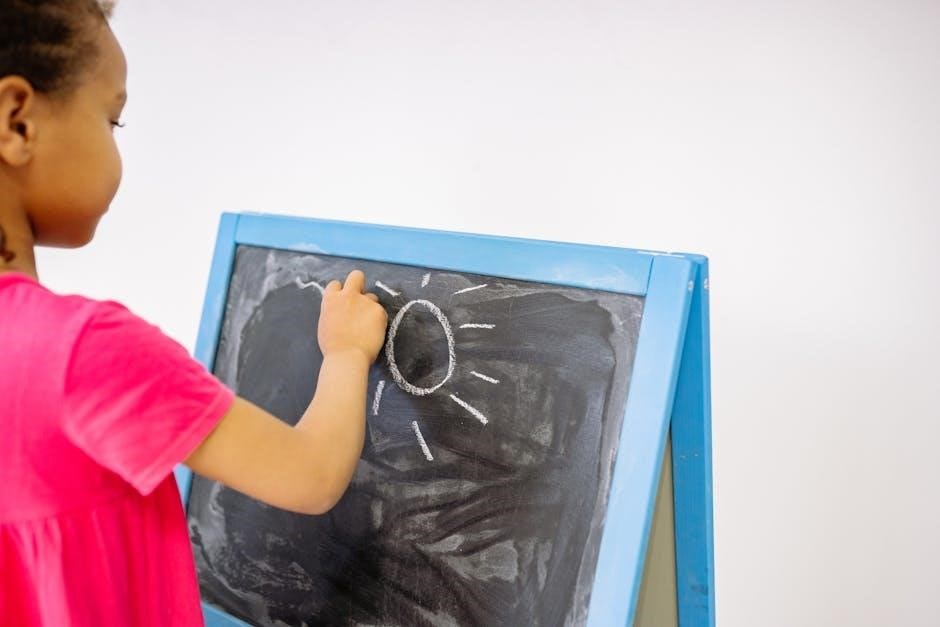
Clearly defined expectations and rules are the cornerstone of effective preschool classroom management. These guidelines provide a framework for acceptable behavior, ensuring all children understand what is expected of them. Rules should be simple, concise, and positively stated, focusing on what to do rather than what not to do.
Consistency is paramount; rules must be enforced fairly and predictably for all students. Regularly reviewing these expectations, especially at the beginning of the year and after breaks, reinforces their importance. Involving children in the rule-making process, when appropriate, can foster a sense of ownership and responsibility. Well-established rules create a safe and structured environment conducive to learning and social-emotional development.
Positive Language & Framing Rules
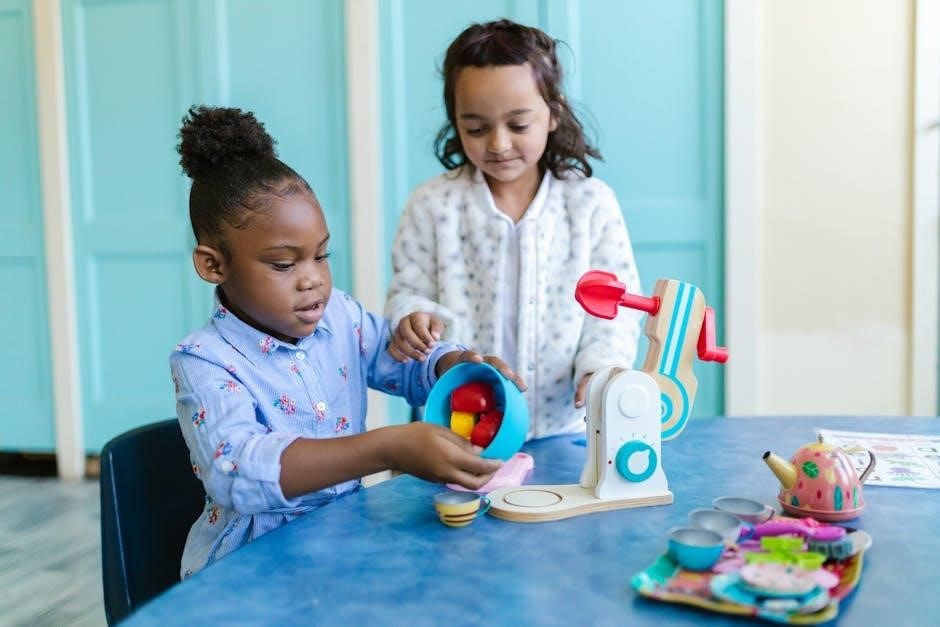
Utilizing positive language when communicating expectations significantly impacts children’s behavior. Instead of stating what not to do (“Don’t run!”), frame rules positively (“Walk, please.”). This approach focuses on desired behaviors, making expectations clearer and more encouraging. Positive framing reduces negativity and promotes a more cooperative atmosphere.
Phrasing rules as requests rather than commands can also be beneficial (“Please put your toys away” versus “Clean up now!”). This fosters respect and encourages intrinsic motivation. Focus on describing the desired outcome (“We use gentle hands with our friends”) rather than simply prohibiting negative actions. This technique helps children understand why the rule exists, promoting understanding and compliance.
Visual Schedules & Routines
Implementing visual schedules and predictable routines provides preschoolers with a sense of security and reduces anxiety. Children thrive on knowing what to expect next, minimizing challenging behaviors stemming from uncertainty. Visual aids, like picture cards depicting daily activities, help children understand the sequence of events.
Routines create a rhythm to the day, allowing children to anticipate transitions and become more independent. Clearly defined routines for activities like circle time, snack time, and cleanup minimize disruptions and promote self-regulation. Consistent routines also free up teachers to focus on individual student needs and provide more personalized support, fostering a calmer learning environment.
Creating a Positive Classroom Environment
A positive classroom environment is foundational for effective preschool classroom management. This involves intentionally cultivating a space where children feel safe, respected, and valued. Focusing on building a sense of community where children feel connected to their peers and teachers is paramount. Encourage collaboration and kindness through group activities and discussions about feelings.
The physical environment also plays a crucial role; a well-organized and inviting space promotes positive interactions. Displaying children’s work and creating cozy areas fosters a sense of ownership and belonging. Prioritizing positive interactions and minimizing negativity sets the tone for a supportive and engaging learning experience, ultimately reducing behavioral challenges.
Building Relationships with Students
Establishing strong relationships with each student is at the heart of effective preschool classroom management. Take the time to learn each child’s individual personality, interests, and needs. Engage in one-on-one interactions – a quick chat during playtime or a shared book can make a significant difference.
Show genuine care and empathy, validating their feelings and experiences. Active listening is key; truly hear what children are communicating, both verbally and nonverbally. Positive interactions build trust and security, making children more receptive to guidance and instruction. A strong teacher-student connection fosters a sense of belonging and encourages positive behavior.
Using Positive Reinforcement & Praise
Positive reinforcement is a powerful tool in preschool classroom management, encouraging desired behaviors and fostering a growth mindset. Focus on praising effort and progress, rather than just outcomes. Be specific with your praise, highlighting exactly what the child did well – “I noticed how you shared your blocks with Leo!”
Utilize a variety of reinforcement strategies, including verbal praise, sticker charts, or small privileges. Ensure praise is genuine and enthusiastic, conveying your sincere appreciation. Catch children being good and acknowledge positive actions promptly. Positive reinforcement builds self-esteem and motivates children to repeat positive behaviors, creating a more harmonious classroom environment.
Managing Challenging Behaviors
Addressing challenging behaviors requires patience, understanding, and a proactive approach. It’s vital to remember that behavior is communication; children often act out when they lack the skills to express their needs. Focus on understanding the underlying cause of the behavior, rather than simply reacting to it. Maintain a calm and neutral demeanor when addressing difficult situations, avoiding power struggles.
Employ strategies like redirection, offering alternative activities or choices. Utilize prompting techniques to guide children towards appropriate behavior. Time-out should be used sparingly and as a calm-down opportunity, not punishment. Consistency is key – apply consequences fairly and predictably. Remember to document behaviors and collaborate with families to develop a unified support system.
Understanding the Function of Behavior
Every behavior serves a purpose for the child, even those that are disruptive. Identifying this function is paramount to effective intervention. Behaviors often fall into four main categories: seeking attention, escaping a task, gaining access to a tangible item, or sensory stimulation. Observing the antecedents (what happens before the behavior) and consequences (what happens after) provides crucial clues.
For example, a child who consistently throws toys during circle time might be attempting to escape an activity they find challenging or overwhelming. Understanding this allows educators to modify the activity or provide support, rather than simply punishing the throwing. Analyzing patterns and documenting observations are essential steps in this process, leading to targeted and effective strategies.
Redirection & Prompting Techniques
Redirection involves gently guiding a child’s attention away from an undesirable activity and towards a more appropriate one. This is most effective when done proactively, before a behavior escalates. For instance, if a child is about to grab a toy from another, offer an alternative engaging activity. Prompting provides support to help children succeed, ranging from verbal cues to physical guidance.
Effective prompting fades over time, encouraging independence. Start with the most supportive prompt needed and gradually reduce assistance as the child demonstrates understanding. Visual prompts, like picture cards showing steps for a task, can be particularly helpful. Combining redirection and prompting creates a supportive environment where children learn expected behaviors and develop self-regulation skills.
Time-Out & Calm-Down Spaces (Appropriate Use)
Time-out and calm-down spaces should be utilized thoughtfully, not as punishment, but as opportunities for self-regulation. A brief time-out (typically one minute per year of age) allows a child to regain control. Crucially, these spaces must be safe, quiet, and free from stimulating materials. A calm-down space, ideally, offers comforting items like pillows or books.

Prior to using either, explain the purpose to the child – a chance to calm down, not a punishment. Afterward, discuss the situation and help the child identify alternative behaviors. Avoid prolonged time-outs or using them for minor infractions. Focus on teaching emotional regulation skills, making these spaces a tool for learning, not simply control.
Transition Management Strategies
Smooth transitions are vital for maintaining a positive classroom flow and minimizing disruptive behaviors. Preschoolers often struggle with shifting activities, so proactive strategies are essential. Effective techniques include providing ample warning before a transition – a “five-minute” warning is common – allowing children to mentally prepare.
Incorporating songs or games specifically designed for transitions can make them more engaging and less stressful. Visual cues, like a timer or a picture representing the next activity, are also beneficial. Clearly define the steps involved in the transition, and practice them regularly. Positive reinforcement for quick and cooperative transitions further encourages desired behavior.
Using Songs & Games for Transitions
Transition songs and games transform potentially chaotic moments into opportunities for fun and engagement. A simple cleanup song, for example, can motivate children to participate willingly. Games like “Red Light, Green Light” or “Simon Says” can guide movement and focus attention during transitions between activities.
The key is to choose songs and games that are short, predictable, and age-appropriate. Repetition is beneficial, as children learn the routines and anticipate the next step. Incorporate movement to release energy and maintain engagement. Adapt songs to fit specific transitions, creating a personalized and playful experience. Positive reinforcement and enthusiastic participation from the teacher amplify the effectiveness of these techniques.
Providing Advance Warnings & Preparation
Effective transitions rely heavily on preparation and advance notice. Children thrive on predictability, and knowing what to expect reduces anxiety and resistance. Give verbal warnings – “Five more minutes until cleanup time” – allowing children to mentally prepare for the change. Visual timers are incredibly helpful, demonstrating the remaining time in a concrete way.
Prepare materials beforehand, so the next activity is readily available. Briefly explain what comes next, linking it to the current activity. For example, “After story time, we’ll build with blocks.” This creates a smooth flow and minimizes disruptions. Consistent routines combined with clear warnings empower children to manage transitions successfully.
Setting Up the Physical Space for Success
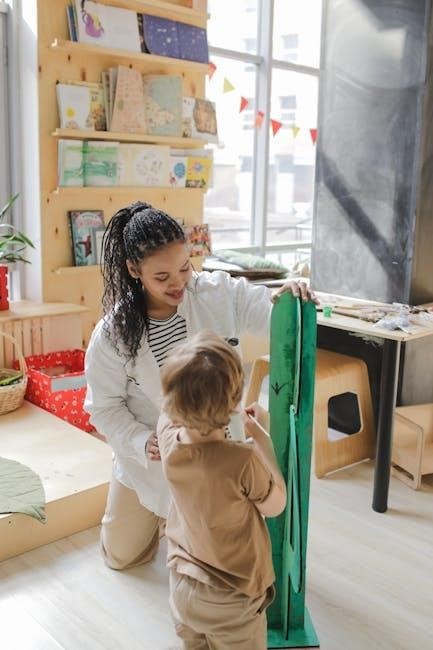
A well-organized classroom significantly impacts behavior and learning. Thoughtful arrangement minimizes distractions and promotes independence. Designated learning centers – blocks, art, dramatic play – clearly define areas for specific activities, reducing confusion and promoting focused engagement. Ensure centers are adequately stocked with appropriate materials, easily accessible to children.
Minimize visual clutter and unnecessary stimuli. Create defined pathways for movement, preventing congestion and accidental collisions. Consider sight lines, allowing for easy supervision of all areas. A calm and organized environment fosters a sense of security and encourages children to explore and learn effectively, supporting positive classroom management.
Organized Learning Centers
Well-defined learning centers are foundational for successful preschool management. Each center should have a clear purpose – art, blocks, dramatic play, science – and contain all necessary materials readily available. Label containers clearly with pictures and words to encourage independence and responsibility for cleanup. Rotate materials regularly to maintain interest and prevent boredom, introducing new challenges.
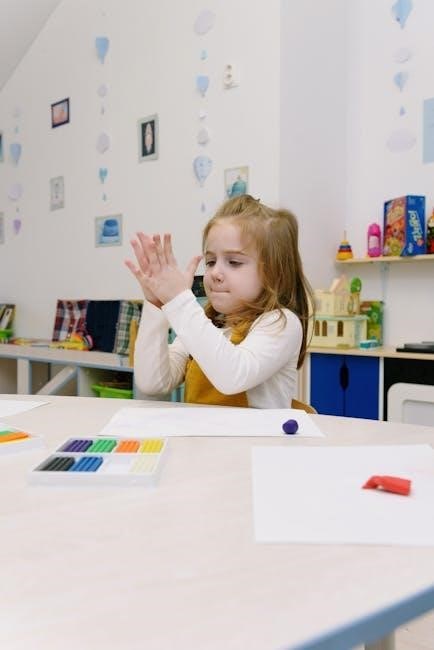
Limit the number of children allowed in a center simultaneously to prevent overcrowding and conflict. Arrange centers to facilitate smooth traffic flow and minimize distractions between activities. Consider the developmental needs of the children when selecting and arranging materials within each center, fostering engagement and learning.
Minimizing Distractions & Creating Defined Areas
A clutter-free classroom significantly reduces distractions for young learners. Clearly define areas for specific activities – reading, building, art – using rugs, furniture placement, or tape on the floor. Store unused materials out of sight to prevent impulsive grabbing and off-task behavior. Limit visual stimulation by avoiding overly bright or busy decorations; a calmer aesthetic promotes focus.
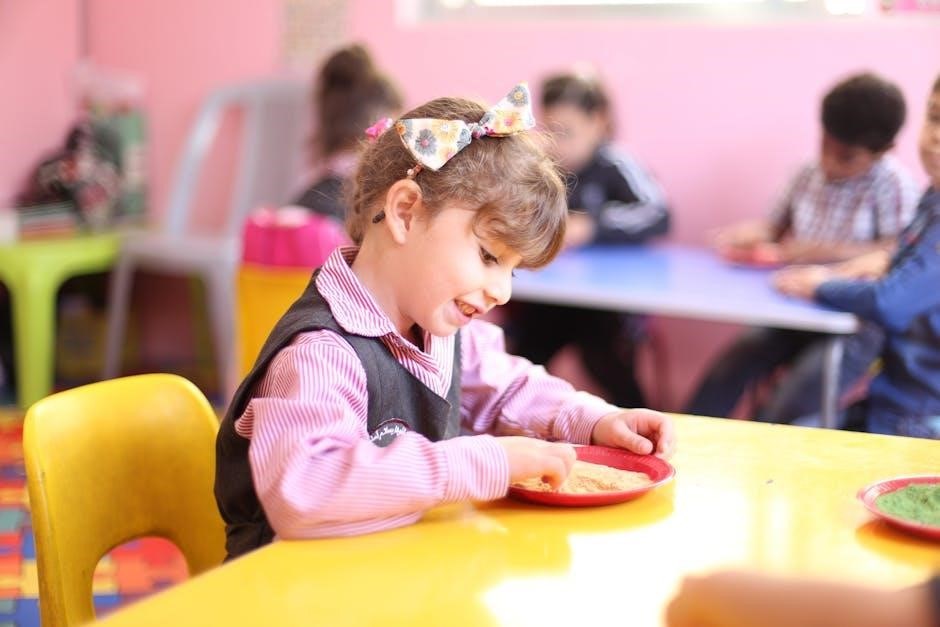
Strategic arrangement of furniture can create natural boundaries and minimize disruptions. Consider sight lines to ensure easy supervision of all areas. Designate a quiet space for children who need a break from stimulation, fostering self-regulation. A well-organized space supports children’s ability to concentrate and engage in learning.
Collaboration with Families
Strong partnerships with families are essential for consistent behavior support. Regular communication – daily reports, newsletters, or quick check-ins – keeps parents informed about their child’s progress and any classroom challenges. Share specific strategies used in the classroom so families can reinforce them at home, creating a unified approach.
Parent-teacher conferences provide opportunities for in-depth discussions about individual child needs. Actively solicit family input regarding their child’s temperament, preferences, and effective strategies. Offer workshops or resources on positive parenting techniques. Consistent messaging between home and school builds trust and maximizes the effectiveness of classroom management efforts.
Regular Communication & Updates
Consistent and clear communication builds strong home-school connections. Daily or weekly updates, even brief ones, inform parents about their child’s behavior, activities, and progress. Utilize various methods – digital platforms, newsletters, or quick notes – to cater to different family preferences. Share positive observations alongside areas for growth, fostering a collaborative spirit.
Proactive communication about potential challenges prevents misunderstandings. Regularly update families on classroom rules and expectations. Be approachable and responsive to parent inquiries. This open dialogue ensures everyone is working together to support the child’s social-emotional development and positive behavior.
Sharing Strategies for Home Consistency
Extending classroom strategies to the home environment reinforces positive behaviors. Provide parents with simple techniques used in the classroom, such as positive reinforcement charts or calm-down strategies. Explain how redirection works and encourage its use during challenging moments at home. Offer specific examples of language used to encourage desired behaviors.
Consistency between home and school is key. Share visual schedules or routine charts used in the classroom so families can implement similar structures. Collaborate on addressing specific behavioral concerns, creating a unified approach. This partnership ensures children receive consistent messaging, promoting self-regulation and positive behavior across all settings.