
Pfannenberg Chiller Manual: A Comprehensive Guide
Pfannenberg provides extensive manuals and support for its chiller systems. Access operating manuals, spare parts lists, and service contact details online, ensuring optimal performance.
Pfannenberg chillers represent a cornerstone in industrial cooling solutions, renowned for their reliability and efficiency across diverse applications. These systems are meticulously engineered to maintain precise temperature control, crucial for processes ranging from plastics manufacturing to data center climate control. Understanding the intricacies of your Pfannenberg chiller is paramount for maximizing its lifespan and operational effectiveness.
This guide serves as a comprehensive resource, navigating you through the essential aspects of Pfannenberg chiller operation, maintenance, and troubleshooting. Pfannenberg continually improves its designs, so referencing the correct, up-to-date manual specific to your unit’s article and serial number is vital. Proper commissioning by the Pfannenberg Service Team is highly recommended to guarantee optimal functionality and adherence to industry standards, including (EU) No. 517/2014 for refrigerant handling.
Regular maintenance, guided by the manual, prevents issues and ensures consistent performance.
Understanding Pfannenberg Chiller Documentation
Pfannenberg chiller documentation is meticulously crafted to provide comprehensive guidance for owners and technicians. These manuals aren’t simply operational guides; they are essential resources detailing installation procedures, maintenance schedules, troubleshooting steps, and safety precautions. Each manual is tailored to a specific chiller model, emphasizing the importance of referencing the document corresponding to your unit’s unique article and serial number.
Within the documentation, you’ll find detailed diagrams of the refrigerant circuit, explanations of cooling tower functionality, and instructions for proper piping connections – distinguishing between open and closed system types. Pay close attention to sections concerning EU No. 517/2014 compliance, particularly regarding leakage checks and refrigerant handling.
Pfannenberg reserves the right to make changes to designs and equipment, so the manual should be considered a guide, and the Pfannenberg Service Team consulted for the latest updates.
Locating the Correct Manual: Article & Serial Number
Identifying the correct Pfannenberg chiller manual is paramount for accurate information. Pfannenberg offers a robust online resource where you can locate documentation using either the article number and serial number of your unit, or its original delivery date. This ensures you receive a manual specifically tailored to your chiller’s configuration and manufacturing period.
The article number uniquely identifies the chiller model, while the serial number pinpoints its individual production run. Utilizing both provides the highest degree of accuracy. If you only have the delivery date, the system will present options, requiring careful verification against your unit’s specifications.
Once the correct manual is located, you’ll gain access to detailed spare parts lists, allowing for efficient maintenance and repairs. Remember, using the wrong manual could lead to incorrect procedures and potential damage.
Accessing Online Manuals and Spare Parts Lists
Pfannenberg simplifies access to its comprehensive library of operating manuals and spare parts lists through its dedicated online platform. This digital resource allows users to quickly download documentation for a wide range of Pfannenberg products, including chillers installed years ago.
To begin, navigate to the Pfannenberg support website. You’ll be prompted to enter either the article number and serial number of your chiller, or the original delivery date. Upon successful entry, the system will display the corresponding manual in a downloadable PDF format.
Within each manual, you’ll find a detailed list of spare parts, complete with part numbers for easy ordering. This streamlines the maintenance process and ensures compatibility. Pfannenberg’s commitment to readily available documentation underscores its dedication to customer support and long-term chiller reliability.
Chiller System Components & Operation
Pfannenberg chillers utilize a refrigerant circuit, cooling towers/condensers, and core components working in harmony to deliver efficient and reliable cooling performance.
Core Components of a Pfannenberg Chiller Unit
Pfannenberg chiller units are comprised of several key components working in unison to provide effective cooling. These include the compressor, responsible for circulating the refrigerant; the condenser, which dissipates heat; the expansion valve, controlling refrigerant flow; and the evaporator, where cooling occurs.
The chiller also features a storage tank, crucial for maintaining consistent cooling capacity. Proper piping connections are essential, especially to prevent overflow during periods of non-operation. The system type, whether open or closed, dictates the complexity of these connections.
Furthermore, control systems monitor and regulate the chiller’s operation, ensuring optimal efficiency and safety. Each component’s functionality is detailed within the operating manual, emphasizing the importance of understanding these elements for effective maintenance and troubleshooting; Regular checks, as outlined in the manual, contribute to the longevity and reliability of the entire chiller system.
Refrigerant Circuit Explained
The Pfannenberg chiller’s refrigerant circuit is a closed-loop system vital for heat transfer. It begins with the compressor, increasing refrigerant pressure and temperature. This high-pressure, hot refrigerant then flows to the condenser, where it releases heat to the surrounding environment, typically air or water, and transitions into a high-pressure liquid.
Next, the refrigerant passes through an expansion valve, reducing its pressure and temperature, creating a low-pressure, cold liquid. This cold refrigerant enters the evaporator, absorbing heat from the cooled medium – water or glycol solution – thus providing the cooling effect.
Finally, the refrigerant returns to the compressor as a low-pressure gas, completing the cycle. Understanding this circuit, detailed in the manual, is crucial for diagnosing issues like leaks or inefficiencies. EU No. 517/2014 compliance necessitates careful monitoring of refrigerant levels and leak checks, as outlined in the Pfannenberg documentation.
Cooling Tower/Condenser Functionality
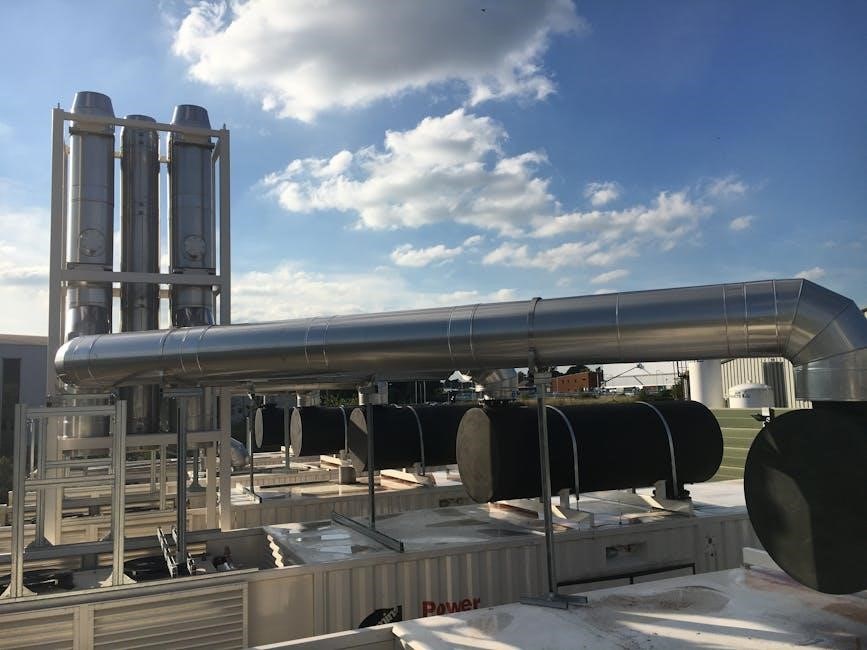
Pfannenberg chillers utilize cooling towers or condensers to dissipate heat extracted from the process. Condensers, either air-cooled or water-cooled, reject heat directly to the atmosphere or a water source, respectively. Cooling towers enhance water-cooling efficiency through evaporative cooling, lowering water temperature before recirculation.
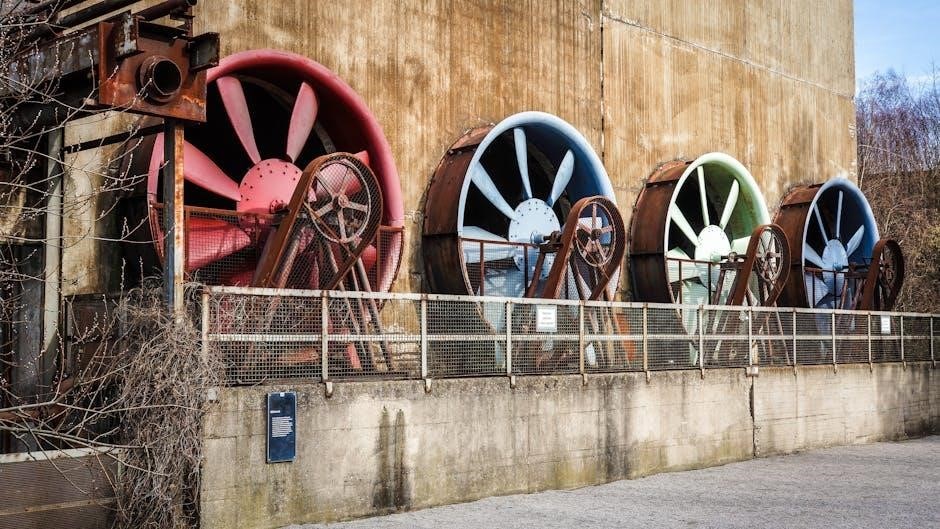
Proper functionality is paramount; the manual details maintenance like fan operation checks for air-cooled units and water quality monitoring for water-cooled systems. Scale buildup or biological growth can significantly reduce efficiency. Regular inspections, as per the maintenance schedule, are vital.
The condenser’s role is to convert high-pressure refrigerant gas into a high-pressure liquid, a critical step in the refrigeration cycle. Efficient heat rejection directly impacts chiller capacity and energy consumption. Refer to the manual for specific guidelines on optimizing cooling tower or condenser performance and troubleshooting common issues.
Installation & Commissioning
Pfannenberg recommends Service Team commissioning for reliable functionality. A pre-installation checklist and proper piping connections (open/closed systems) are crucial, as detailed in the manual.
Pre-Installation Checklist
Before initiating the installation of your Pfannenberg chiller, a thorough pre-installation checklist is paramount to ensure seamless operation and prevent potential issues. Verify the delivery includes all components listed in the accompanying documentation and that no damage occurred during transit.
Confirm the installation site meets the specified environmental requirements, including adequate ventilation and temperature control. Ensure the floor can support the chiller’s weight when fully operational, considering water and refrigerant levels.
Inspect and prepare all necessary piping connections, adhering to local regulations and Pfannenberg’s guidelines. Determine if your system is open or closed, referencing the included flow diagram for clarity.
Electrical connections must be verified by a qualified electrician, matching the chiller’s voltage and frequency requirements. Finally, review the operating manual thoroughly to familiarize yourself with safety precautions and operational procedures before commencing installation.
Piping Connections & System Type (Open/Closed)
Proper piping connections are crucial for efficient Pfannenberg chiller operation. All connections must be leak-proof and designed to withstand the system’s operating pressures and temperatures. Utilize appropriate materials compatible with the refrigerant and coolant used in your specific model.
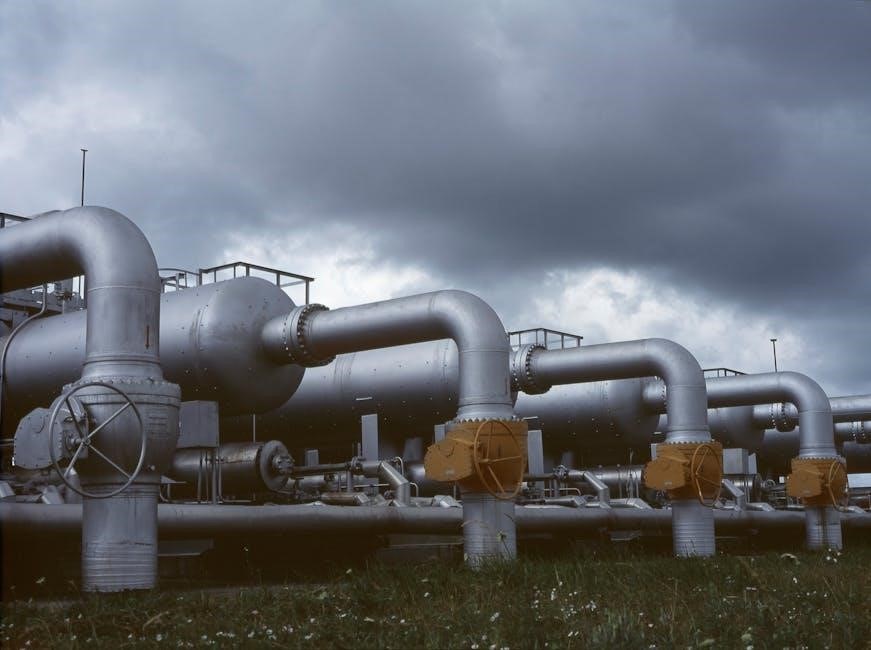
Carefully consult the included flow diagram to accurately determine whether your system is configured as an open or closed loop. Open systems directly exchange water with the environment, while closed systems recirculate a sealed fluid.
Design piping to prevent potential overflow issues, particularly during periods of non-operation. Incorporate valves or other mechanisms to manage fluid levels effectively.
Ensure adequate pipe insulation to minimize heat gain or loss, optimizing chiller performance. Incorrectly installed piping can lead to reduced efficiency, system failures, and potential safety hazards. Always adhere to Pfannenberg’s recommended practices and local plumbing codes.
Importance of Pfannenberg Service Team Commissioning
Pfannenberg strongly recommends commissioning your chiller system with their qualified Service Team. Proper commissioning ensures optimal performance, reliability, and longevity of your investment. This process involves a thorough system check, verifying all components function correctly and are integrated seamlessly.
The Service Team will validate refrigerant charge, electrical connections, and control system settings, guaranteeing adherence to manufacturer specifications. They’ll also perform initial operational tests, identifying and addressing any potential issues before they escalate.
Commissioning by trained professionals minimizes the risk of premature failures, costly repairs, and voiding of warranty coverage. It guarantees the chiller operates at its designed efficiency, reducing energy consumption and operational costs.
Don’t compromise on performance; trust Pfannenberg’s expertise to start your chiller system right. Contact their Service Team to schedule commissioning and secure peace of mind.

Maintenance & Service
Pfannenberg chillers require regular maintenance for reliable operation. Schedule checks, address leakage per (EU) No. 517/2014, and consult the manual for details.
Regular Maintenance Schedules
Pfannenberg recommends establishing consistent maintenance schedules to guarantee optimal chiller performance and longevity. These schedules should be tailored to the specific chiller model and operating environment, referencing the detailed guidelines within your unit’s operating manual.
Routine checks encompass refrigerant levels, electrical connections, and component inspections. Regular leakage checks are crucial, particularly concerning compliance with (EU) No. 517/2014 regulations, which address fluorinated greenhouse gases. Maintaining detailed records of all maintenance activities is highly advised.
Furthermore, filter cleaning or replacement, condenser coil inspections, and pump assessments are vital components of a proactive maintenance plan. Ignoring these schedules can lead to reduced efficiency, increased energy consumption, and potentially costly repairs. For complex tasks or if you lack the necessary expertise, always engage the Pfannenberg Service Team to ensure proper execution and adherence to safety protocols.
Leakage Checks & EU No. 517/2014 Compliance
Pfannenberg chillers utilize refrigerants subject to stringent regulations, notably (EU) No. 517/2014. This regulation mandates regular leakage checks to minimize the environmental impact of fluorinated greenhouse gases. The frequency of these checks depends on the refrigerant charge size and chiller type, as detailed in the operating manual.
Proper documentation of all leakage checks, including dates, results, and any remedial actions taken, is essential for demonstrating compliance. Any detected leaks must be promptly repaired by qualified personnel using approved methods and refrigerants.
The Pfannenberg Service Team offers consultancy and services specifically tailored to meet these regulatory requirements. Ignoring these obligations can result in significant penalties. Ensure your maintenance personnel are fully aware of and trained in the procedures outlined in EU No. 517/2014 and the specific recommendations within your chiller’s documentation.
Troubleshooting Common Issues
Pfannenberg chiller operating manuals provide detailed troubleshooting guides for common operational issues. These often include problems related to insufficient cooling, unusual noises, or error code displays. Before attempting any repairs, always consult the manual and disconnect the power supply to ensure safety.
Common issues can sometimes be resolved with simple checks, such as verifying proper airflow to the condenser, confirming correct water flow rates in water-cooled systems, and inspecting filter cleanliness. However, more complex problems, particularly those involving the refrigerant circuit, require the expertise of a qualified Pfannenberg Service Technician.
Attempting unauthorized repairs can void the warranty and potentially damage the chiller. The manual emphasizes the importance of contacting the Pfannenberg Service Team for assistance with any issues beyond basic troubleshooting steps. Remember to document all troubleshooting efforts for future reference.
Safety & Operational Considerations
Pfannenberg manuals highlight potential overflow risks and emphasize proper piping design. Continuous product improvement means designs may change; no features are guaranteed.
Potential Overflow Issues & Prevention
Pfannenberg chillers, like all refrigeration systems, can experience overflow issues if not properly managed, particularly during periods of non-operation. A key concern is the potential for condensate or stored liquid to accumulate and exceed the capacity of the storage tank. This is especially relevant when the chiller is inactive, as the natural thermal cycling can contribute to volume expansion.
To mitigate this risk, Pfannenberg strongly recommends designing piping connections to actively prevent overflow. This can be achieved through the strategic implementation of valves or other flow control mechanisms. These components should be integrated to effectively manage liquid levels and prevent unwanted accumulation.
Careful consideration of whether the system is configured as an open or closed loop is crucial; Referencing the included flow diagram will help determine the system type and inform appropriate preventative measures. Proper system design, coupled with regular maintenance checks, will ensure reliable and safe operation of your Pfannenberg chiller.
Pfannenberg is committed to continuous improvement and innovation in its chiller technology. As such, the company reserves the right to make changes to the design, equipment, and technological specifications of its products without prior notice. This commitment to advancement means that the information contained within this operating manual should be considered a guide, but may not always reflect the very latest product iterations.
Users should understand that specific features detailed in this manual cannot be guaranteed for all Pfannenberg chiller units. Variations may exist due to ongoing development and model updates. Always refer to the specific documentation accompanying your individual unit for the most accurate and up-to-date information.
Pfannenberg emphasizes that no claims regarding particular unit features can be derived solely from the content of this manual. For clarification or detailed specifications, please contact our Service Team directly.
Pfannenberg Service Team Contact Information
For expert assistance with your Pfannenberg chiller, including commissioning, maintenance, and troubleshooting, please reach out to our dedicated Service Team. We strongly recommend utilizing our Service Team for initial commissioning to ensure optimal and reliable functionality of your chiller system. This proactive approach helps prevent potential issues and maximizes performance.
If you require consultancy regarding maintenance schedules or leakage checks in accordance with (EU) No. 517/2014, our team is readily available to provide guidance and support. Additionally, should you have any questions concerning spare parts, our Service Team can efficiently assist you in locating the necessary components.
Detailed contact information, including phone numbers and email addresses, can be found on page 2 of this manual. Don’t hesitate to contact us – we are committed to providing exceptional Pfannenberg chiller support.